
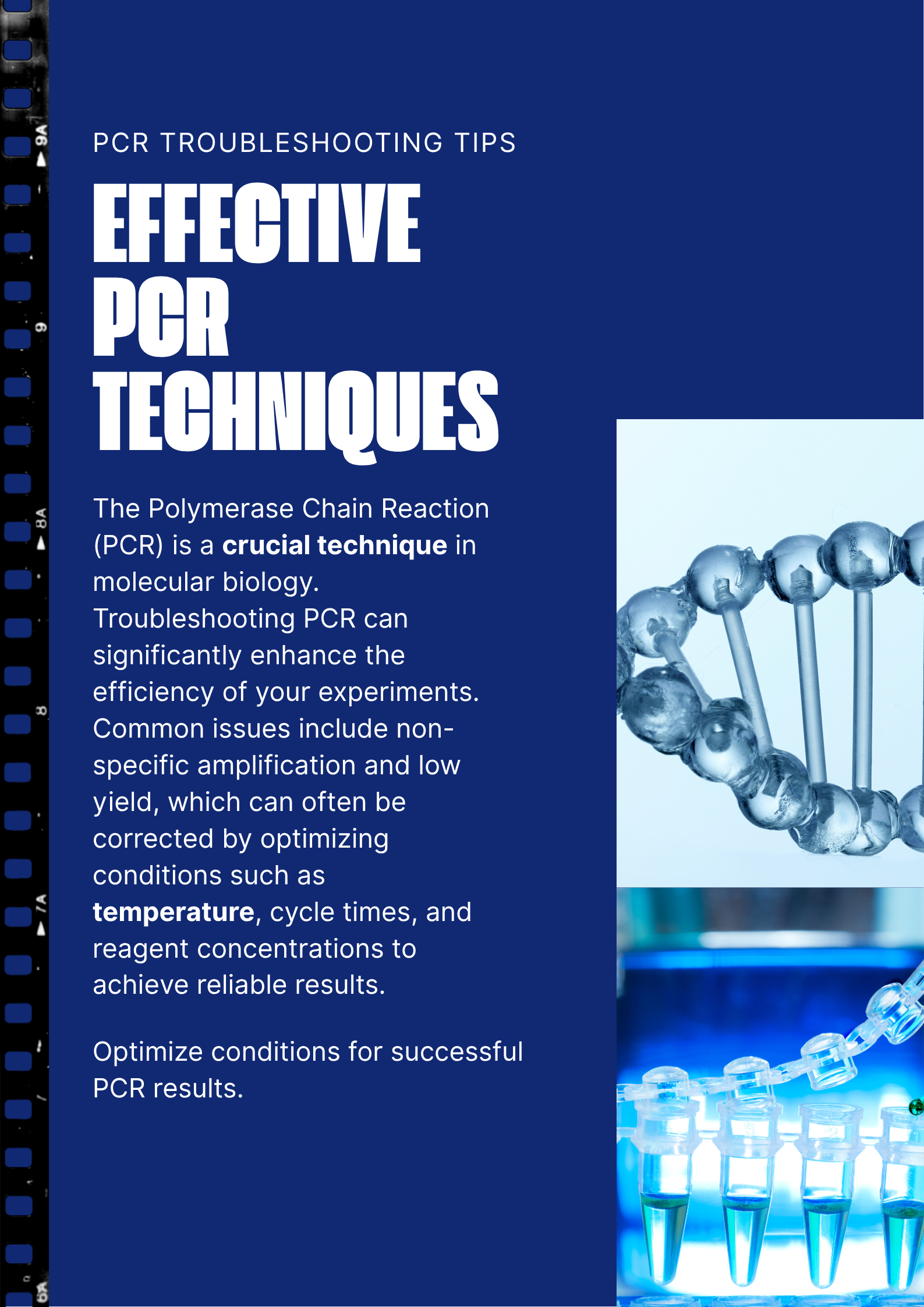

Meta Description:
Struggling with PCR experiments? Discover practical PCR troubleshooting tips, including solutions for low amplification, non-specific bands, and primer-dimer formation, to get reliable molecular biology results.
Polymerase Chain Reaction (PCR) is a fundamental technique in molecular biology and genetics research, widely used for DNA and RNA amplification. However, many researchers encounter issues such as low amplification, non-specific bands, or failed reactions. At AIC Limited, we help scientists troubleshoot PCR and optimize protocols for reliable, reproducible results.
1. Low or No Amplification
- Check Template Quality: Degraded or contaminated DNA/RNA can prevent successful PCR.
- Optimize Annealing Temperature: Adjust temperatures for better primer binding.
- Adjust Magnesium Ion (Mg²⁺) Concentration: Magnesium is crucial for polymerase activity.
2. Non-Specific Bands
- Primer Design Matters: Use primers specific to your target sequence.
- Touchdown PCR: Gradually decrease the annealing temperature to reduce non-specific amplification.
- Reagent Purity: Contaminated reagents can produce spurious bands.
3. Primer-Dimer Formation
- Primer Concentration: Too high concentrations promote primer-dimers.
- Design Primers Carefully: Avoid complementary 3’ ends.
4. General PCR Tips
- Always include positive and negative controls.
- Keep reaction setup areas free from contamination.
- Use fresh reagents for consistent results.
At AIC Limited, we specialize in helping researchers optimize PCR protocols, troubleshoot experiments, and achieve high-quality molecular biology results.
💡 Pro Tip: Small adjustments in cycling conditions, reagent concentrations, or primer design can save time and improve experiment reliability.
🔗 Learn more about DNA extraction, RNA handling, and molecular biology troubleshooting on our blog: AIC Limited Blog
Hashtags (for social sharing):
#PCR #MolecularBiology #LabTips #Bioinformatics #AICLimited #ResearchSupport #ScienceMadeEasy